Instagram algorithm 2026: the 4 ranking signals that matter
Instagram runs 4 separate algorithms in 2026, one each for feed, reels, stories and explore. Here are the ranking signals that decide whose content wins.
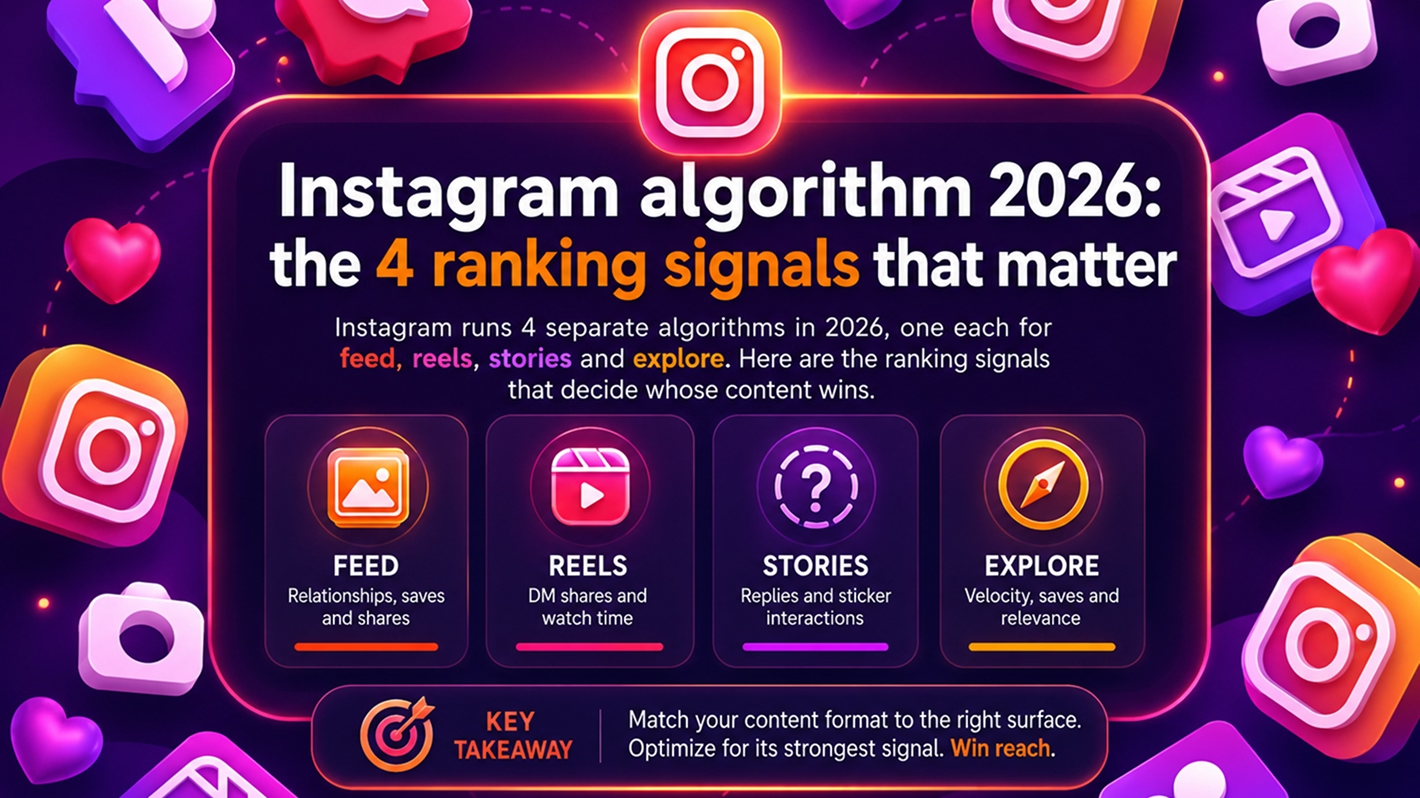


Instagram runs 4 separate algorithms in 2026, one each for feed, reels, stories and explore. Here are the ranking signals that decide whose content wins.
Show Image
If you treat Instagram as one algorithm, you're already losing. The platform actually runs four separate ranking systems in 2026: one each for feed, reels, stories, and explore. The signals that win in one barely move the needle in another.
I've spent the last few years at Clixie watching teams pour resources into Instagram content that performs well on TikTok or YouTube and then dies on the vine. The reason is almost never quality. It's a mismatch between the content format and the specific algorithm deciding whether it gets shown.
This guide breaks down what each of the four algorithms actually weighs in 2026. It draws on what Head of Instagram Adam Mosseri has confirmed publicly, what third-party analytics platforms have measured, and what we've observed shipping interactive video content for L&D and marketing teams.
Key takeaways
- Instagram runs 4 ranking systems in parallel: feed, reels, stories, and explore.
- DM shares are the strongest signal for reels reach in 2026, weighted above likes and comments (Buffer, 2026).
- Stories are designed to deepen existing relationships, not acquire new followers.
- Carousels still outperform single-image posts in the feed because every swipe counts as engagement.
- Hashtags lost most of their weight in late 2024; captions with searchable keywords do more.
- Recommendation guidelines can cap your reach before a post ever gains traction, even when the content doesn't break a rule.
Instagram algorithm comparison: 4 ranking systems at a glance
Why does Instagram have four algorithms in 2026, not one?
Instagram serves roughly 2 billion monthly active users in 2026 (Statista, 2026, retrieved 2026-06-15), and a single ranking system would struggle to personalize at that scale. Mosseri has confirmed in multiple Q&A videos that the platform uses distinct AI systems for each surface, each trained on the user behaviors specific to that surface.
The practical implication: you cannot port a winning strategy from one surface to another. Watch time wins on reels, story completion rate wins on stories, save-to-share ratio wins in the feed. Treating Instagram as a monolith is the most common mistake we see when L&D and marketing teams plan their distribution.
When we ship interactive video content for NeuCup, the same 90-second piece can perform 4x better on reels than on feed. The reason is simple: we re-cut it for sound-off viewing and tighten the first 3 seconds. The content didn't change. The format match did.
How does the feed algorithm decide what you see?
The feed algorithm ranks posts using three signal categories: your relationship with the creator, how fast people are engaging with the post, and your past behavior patterns. For accounts you already follow, relationship strength carries the heaviest weight (Hootsuite, 2026, retrieved 2026-06-15).
Relationship strength is measured through DMs exchanged, comments traded back and forth, profile visits, and how often you watch the creator's stories. If you regularly engage with someone across multiple surfaces, their feed posts move toward the top of yours, regardless of recency.
Engagement velocity matters more than total engagement
The feed algorithm gives heavy weight to engagement that happens fast. Posts that gather likes, saves, and shares within the first 30 to 60 minutes get pushed to a wider audience. Posts that gain the same engagement spread over days do not. This is why posting when your audience is actually online matters more than posting often.
Saves and shares outweigh likes
Not all engagement is equal. The hierarchy in 2026 looks like this:
- Shares to DM (strongest signal)
- Saves (high intent: user wants to return)
- Comments (especially comments with replies that create threads)
- Profile visits from the post
- Likes (weakest signal, near-passive)
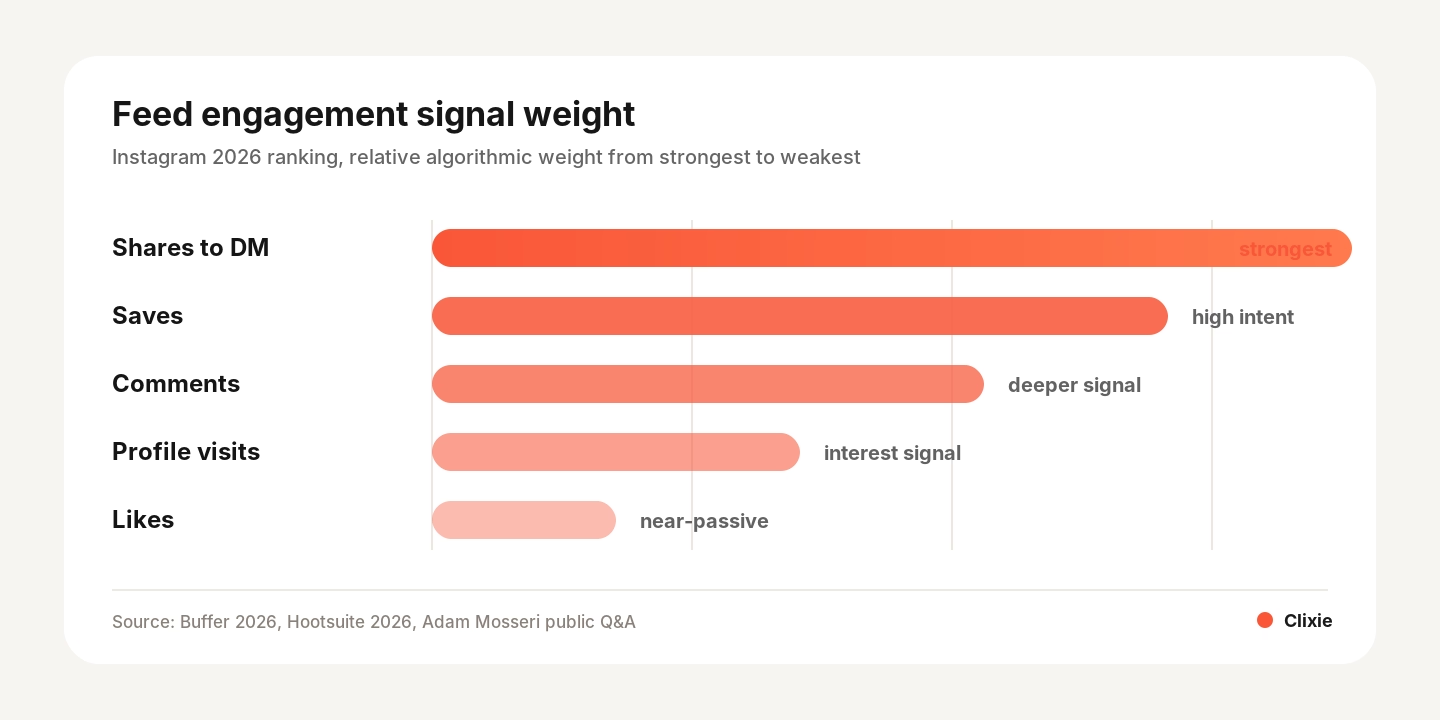
A post with 50 saves and 100 likes will typically outperform one with 500 likes and 5 saves, because the algorithm reads saves as a high-intent signal of value.
Carousels still beat single images
Carousel posts encourage multiple interactions. Each swipe registers as engagement. Instagram even re-serves the carousel a second time to users who didn't swipe through, this time leading with the second slide. We've seen carousels deliver 2 to 3 times the reach of single-image posts for the same content, mostly because of this mechanic.
Optimal carousel format in 2026:
- Square (1080 x 1080) for general use
- Portrait (1080 x 1350) for maximum feed real estate
- Landscape (1080 x 566) only when the source footage is natively wide
- Up to 10 slides, but completion rate drops sharply after slide 5
One more feed lever that's easy to miss: audio. Adding a trending or original sound to a post, even a static image, nudges it toward the more immersive treatment the algorithm favors, and gives it a path into sound-led surfaces.
Which signals does the reels algorithm weight most?
The reels algorithm in 2026 weights DM shares above every other signal, with watch-time-to-length ratio in second place. This comes from public statements by Adam Mosseri and Buffer's analysis of reel performance (Buffer, 2026, retrieved 2026-06-15). Likes and comments matter, but they don't unlock the same reach.
This is the single most important shift to internalize. A reel with 5,000 likes and 0 DM shares will reach a fraction of the audience of a reel with 1,000 likes and 50 DM shares. Mosseri has explained this publicly. A DM share is a viewer choosing to spend social capital to send the content to a specific person. That's a much stronger trust signal than a tap.
The 3-second rule actually decides everything
Reels are watched with sound off by default for most users. The first 3 seconds need to communicate value without audio. Text overlays, on-screen captions, and a clear visual hook are non-negotiable. Phrases like "here's why your engagement dropped" or "3 mistakes killing your reach" perform better than slow-build openings.
For AI-generated interactive video, this matters even more. If your reel previews a longer interactive experience, the first 3 seconds need to spike curiosity hard. Hard enough that the viewer DMs the reel to a friend who needs it. The DM share is your bridge from short-form discovery to long-form engagement.
Avoid TikTok watermarks
Instagram actively suppresses reels that show TikTok watermarks or other third-party platform identifiers. If you cross-post, re-export from the source file or use Instagram's native editor. This is a quiet but consistent demotion factor that catches teams who don't realize the platform reads watermarks programmatically.
Reel length sweet spot
Short reels (7 to 15 seconds) tend to outperform longer ones because they're more likely to be rewatched, and loop completion is read as high engagement. The 90-second cap exists, but completion rate drops after about 22 seconds for most content categories.
How does the stories algorithm rank whose stories appear first?
The stories algorithm ranks who appears first based on your past viewing patterns with each account, the recency of your interactions, and how often you've replied or tapped through. Relationship signals outweigh content quality on this surface (Sprout Social, 2026, retrieved 2026-06-15).
The critical thing to understand about stories: they're designed to strengthen existing relationships, not to acquire new followers. Stories don't appear on the explore page. They don't get recommended to non-followers. They have no discovery mechanism. If you treat stories as a top-of-funnel acquisition tool, you're using the wrong tool.
What moves you to the front of the story tray
Stories ranking signals in 2026, in order of weight:
- Story completion rate (does the viewer watch to the end?)
- Story replies via DM (the highest-value action a viewer can take)
- Sticker interactions (polls, quizzes, sliders, question boxes)
- Profile visits triggered by a story
- Tap-forwards vs swipe-aways (forward is mild positive, swipe is mild negative)
Stickers are the highest-impact move
Instagram's algorithm reads sticker interactions as active engagement, not passive viewing. Posting a story with a poll, slider, or question sticker can multiply your story's algorithmic weight several-fold. The polls don't need to be deep. "Did you try this yet? Yes / Not yet" works. If you want a deeper breakdown of which interactive formats drive the most response, our guide to interactive video question types maps the same logic onto longer-form video.
Post stories on a predictable cadence
Accounts that post stories daily stay at the front of their followers' story trays. Accounts that post sporadically fall back, even when their content is strong. Two to three stories per day, every day, beats a 10-story burst once a week.
What gets content onto the explore page?
The explore page algorithm surfaces content based on three things: engagement patterns of users similar to the viewer, the post's velocity and total engagement, and how well the content matches the viewer's past behavior (Hootsuite, 2026, retrieved 2026-06-15).
Explore is the only Instagram surface where non-followers see your content at scale. Everything else (feed, stories) is for people who already know you. Explore is where new audiences happen.
What makes a post explore-eligible
A few signals push content into explore:
- Rapid early engagement within the first hour of posting
- High save rate relative to total reach (saves signal "worth revisiting")
- DM shares outside the creator's existing audience
- Keyword relevance in captions matching what similar users search
- Audio that's trending within the niche
Captions now work like search
Instagram's AI reads caption text and indexes it for in-app search and explore matching. Stuffing 30 hashtags at the bottom no longer works the way it did in 2022. Writing captions with natural keywords that your target audience would actually type into Instagram search does work.
For a fitness account, "strength training for beginners at home" written naturally in a caption now does more for discoverability than #strengthtraining #homeworkout #fitnesstips at the end.
5 to 10 hashtags, niche over broad
The hashtag rule shifted around late 2024. Mosseri confirmed Instagram reduced hashtag weight to fight spam (Adam Mosseri on Instagram, 2024, retrieved 2026-06-15). The current best practice is 5 to 10 hashtags, with the mix weighted toward niche tags under 100K posts. Generic mega-tags like #love or #instagood are wasted slots.
What content does Instagram limit from recommendations?
Instagram's recommendation guidelines keep certain content out of explore, reels recommendations, and feed suggestions even when it doesn't break a rule outright. The platform reduces distribution for content that brushes against four broad categories, regardless of how well it's optimized otherwise (Instagram Help Center, 2026, retrieved 2026-06-17).
The categories most likely to cap your reach:
- Self-harm and mental-health content that could be sensitive, even when supportive in intent
- Sexually suggestive or explicit imagery, including borderline content
- Regulated goods such as tobacco, vaping, weapons, and certain supplements
- Misinformation flagged by third-party fact-checkers
You might create technically perfect content with trending audio and optimal timing, but if it touches one of these lines, Instagram's AI limits its reach before it ever gains traction. I've watched creators lose months of audience-building momentum because a single post quietly tripped a recommendation filter and nothing on the surface explained why.
The cost compounds. Adhering to Community Guidelines (retrieved 2026-06-17) isn't only about avoiding suspension. Each flag signals to the algorithm that an account may not be safe to recommend, which drags on the performance of future posts too. The platform rewards creators who consistently produce guideline-compliant content with steadier distribution across every surface. For regulated industries, this is exactly why teams building interactive compliance training keep their public-facing social content deliberately clear of borderline topics.
How do you avoid shadowbanning on Instagram?
Instagram has never officially confirmed shadowbanning as a feature. The platform does demote content that triggers spam-detection systems, though. The most common triggers in 2026 are engagement-pod activity, banned hashtags, and content that violates recommendation guidelines around self-harm, regulated products, or misinformation (Instagram Help Center, 2026, retrieved 2026-06-15).
What actually causes reach drops:
- Engagement pods (coordinated likes and comments from groups)
- Banned or restricted hashtags (the list changes; check before using)
- Automation tools that mimic human behavior
- Content that brushes recommendation guidelines (regulated products, suggestive imagery, misinformation flagged by third-party fact-checkers)
- Watermarks from competing platforms
The fix is structural, not tactical: build your engagement through genuine community interaction. If your reach drops suddenly, check first whether you used a borderline hashtag or hit a recommendation guideline, not whether you were "shadowbanned."
How do you actually beat the Instagram algorithm in 2026?
You don't beat the algorithm by gaming it. You beat it by aligning your content format to the right surface. Then you optimize for the signal that surface weighs most. Buffer's 2026 analysis of high-performing accounts shows the top quartile of growth comes from creators who match format to surface, not creators who post most often (Buffer, 2026, retrieved 2026-06-15).
The format-to-surface match
Drive interactions through specific CTAs
Generic "double tap if you agree" still works because it's a low-friction ask. But specific questions in the caption do more. "Which strategy worked for your team?" or "Tag someone who needs to see this" generate comment threads and DM shares. The algorithm reads those as high-quality engagement.
Reply to comments inside the first hour
Reply windows matter. The first 60 minutes after posting is when Instagram's algorithm decides whether to expand your reach. Replying to early comments creates a comment thread, which is read as deeper engagement than a single comment. Set a 30-minute timer after every post and clear the comments.
Which Instagram analytics should you actually track?
The numbers worth watching aren't the ones in the headline. Track save rate, DM-share rate, and first-hour engagement velocity ahead of raw likes, because those are the signals the 2026 algorithms weigh most heavily. Likes are close to a vanity metric now; saves and DM shares are what move reach.
Instagram Insights, the native analytics built into professional accounts, is the right starting point. It surfaces the hours your audience is actually active, which is the input that matters most for timing posts into that first-hour velocity window. Third-party tools like Buffer layer historical performance on top, recommending posting windows from your own past data rather than generic best-time charts (Buffer, 2026, retrieved 2026-06-17).
A practical reading routine:
- Weekly: check save rate and DM-share rate per post; double down on the formats that earn them.
- Per post: watch first-hour engagement; a slow first hour usually means a weak hook or a bad time slot, not bad content.
- Monthly: review which surface (feed, reels, stories, explore) drove your reach, and rebalance effort toward it.
One caution on cadence: more posting isn't automatically more reach. If volume dilutes that critical first-hour velocity per post, you're working against the feed algorithm, not with it. Find the frequency your audience can actually absorb, then hold it steady.
The catch with Instagram analytics is that they stop at the platform's edge. You can see that a reel earned DM shares, but not what happened after someone tapped through. That's where pairing social reach with interactive video analytics closes the loop, because the interactive layer keeps measuring once the viewer leaves the feed.
Practical applications for video marketers
For teams shipping video content, the most underused move in 2026 is matching content length and interactive elements to the surface. A 5-minute training video doesn't belong on reels. A 7-second teaser of that training, captioned for sound-off, with a CTA to DM for the full interactive version: that's what the reels algorithm rewards. It drives the DM share signal.
This is where making existing video interactive creates compound returns. The Instagram reel drives the DM share. The DM delivers an interactive link. The interactive content generates analytics on retention and engagement that nothing on Instagram itself can deliver.
For L&D teams in particular, the same pattern unlocks Instagram as a top-of-funnel for training delivery. A reel teases a compliance topic. The DM delivers a SCORM-ready interactive video that tracks completion in your LMS. The Instagram algorithm rewards the share, and your training pipeline picks up qualified leads. Compare this to traditional formats: see how interactive video stacks up against Cinema8 and similar platforms for use cases that depend on engagement tracking.
FAQs
How many algorithms does Instagram use in 2026?
Instagram uses four distinct ranking algorithms in 2026, one each for the feed, reels, stories, and explore page. Each algorithm weighs signals differently, so a strategy that wins on reels (DM shares, watch-time-to-length ratio) will not necessarily win in the feed (saves, shares, carousel completion).
What is the most important ranking signal for Instagram reels?
DM shares are the most heavily weighted ranking signal for reels in 2026, above likes, comments, or watch time. Adam Mosseri has confirmed this publicly. A DM share signals that a viewer found the content valuable enough to send to a specific person, and the algorithm reads that as a high-trust quality signal.
How many hashtags should I use on Instagram in 2026?
Use 5 to 10 niche hashtags per post in 2026, with the mix weighted toward tags under 100K posts. Instagram reduced hashtag weight in late 2024 to combat spam, so generic mega-tags no longer help. Natural keywords in captions do more for discoverability than hashtag stuffing.
Do Instagram stories appear on the explore page?
No, stories never appear on the explore page in 2026. Stories are designed to strengthen relationships with existing followers, not to acquire new ones. Use stories for community building, sticker engagement, and behind-the-scenes content. Use reels and feed posts for reach to non-followers.
Why is my reel getting impressions but no engagement?
A reel with high impressions and low engagement usually fails at one of three things: the 3-second hook, the sound-off optimization, or the DM-share trigger. Check whether the first 3 seconds communicate value without audio. Check whether captions are on by default. Ask whether a viewer would DM it to a specific person.
How long should an Instagram reel be in 2026?
7 to 15 seconds is the sweet spot for reels in 2026. Shorter reels are more likely to be rewatched, and loop completion is read by the algorithm as high engagement. The 90-second cap exists, but completion rate drops sharply after about 22 seconds for most content categories.
What content does Instagram limit from being recommended?
Instagram's recommendation guidelines reduce distribution for content involving self-harm, sexually suggestive imagery, regulated goods (tobacco, vaping, weapons), and fact-checked misinformation, even when the post doesn't violate a rule outright. Repeated flags also drag down the reach of an account's future posts, so staying clearly inside the guidelines protects long-term distribution.
.png)
.png)